

From Fumbled Mess to Flawless Masterpiece
We’ve all been there. You break out good flower, sit down to roll, and end up with something lumpy, loose, and burning down one side like it’s in a hurry to disappoint you. A bad roll wastes product, kills flavor, and turns a relaxed session into a rescue mission.
The fix usually isn’t more effort. It’s a better technique. Good tips on rolling come down to a few physical basics: even texture, balanced packing, steady pressure, and enough airflow to enjoy what you rolled. Grinding consistency matters because it directly affects how evenly a joint burns and how easy it is to draw, as explained in Verona Collective’s joint rolling guide.
That’s why experienced rollers don’t all use the exact same method. They use the method that fits the moment. A quick solo joint, a tapered cone for sharing, a machine roll when consistency matters, or a more advanced style when presentation counts. Each approach has strengths, weaknesses, and a best-use case.
Wallflower Cannabis House gives you the kind of premium flower that deserves a clean roll and a smooth session. If you’re ready to stop guessing and start rolling with confidence, these named techniques will help you build real skill, one joint at a time.
1. The Classic Hand Roll
The classic hand roll is still the best place to start. It teaches touch, pressure, and distribution. Once your hands learn what a properly packed joint feels like, every other rolling style gets easier.
If you’re new, thicker papers help. They’re more stable in the hand, and that extra structure makes the tuck less frustrating. Rolling on a flat surface also gives you more control, especially when you’re still learning how much pressure is enough.

Build the shape before you tuck
Start by creating a small cradle with your fingers so the flower sits evenly in the paper. Don’t rush to close it. Use a gentle back-and-forth rolling motion with your fingertips until the flower forms a uniform cylinder.
A lot of beginners fail at this stage because they’re trying to force the paper around loose, uneven chunks. Even texture matters more than fancy gear. If you don’t have a grinder, breaking flower up by hand or with scissors can still get you where you need to go, as long as the consistency is even.
Practical rule: If the joint feels rigid, you packed too much. If it collapses when you pick it up, you packed too little.
A hand roll works well for tourists leaving a dispensary, locals heading to an outdoor event, or anyone who wants a personal-use joint without extra tools. It’s also the easiest way to learn how different strains behave. Dense flower and sticky flower don’t roll exactly the same, and your fingers will notice before your eyes do.
What works and what doesn’t
A few habits make this method much easier:
- Use a larger paper first: King Size papers give you more room to correct mistakes.
- Set the paper at an angle: A slight angle, around the classic diagonal setup many rollers prefer, helps the wrap close more naturally.
- Seal slowly: Wet the adhesive strip evenly, not all at once, so the paper doesn’t wrinkle or tear.
Once the joint is rolled, give it a gentle squeeze. It should feel firm and hold its shape without feeling hard. If you want a visual step-by-step to practice at home, Wallflower’s guide on how to make a joint is a solid companion piece.
2. The Cone Roll
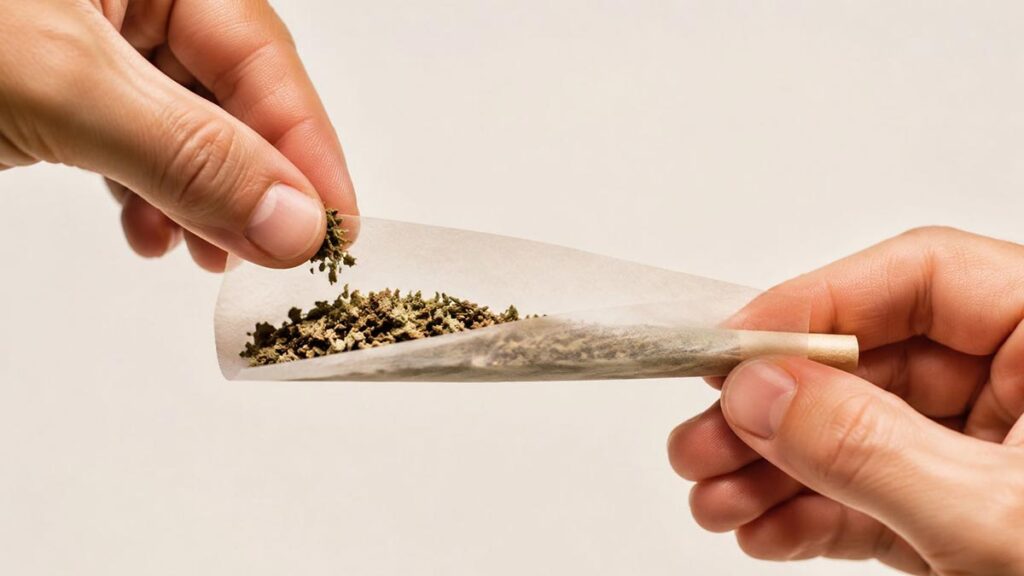
A cone roll looks polished, but its primary benefit is airflow. The wider top gives the flower more room, and the narrow tip helps keep the mouth end tidy and controlled. For a shared session, it’s one of the most practical styles you can roll.
This is also where many people discover that “even” doesn’t always mean “straight.” Standard beginner tutorials often teach a parallel roll, which is fine for slim joints. But if you’re building a cone or blunt-style shape, rolling at an angle helps prevent uneven density and reduces the chance of one side racing ahead. That overlooked technique is highlighted in JetRoom’s discussion of rolling at an angle.
Use the taper on purpose
The best cone rolls are intentional from the start. Put your filter at the narrow end first, then load more flower toward the burn end. Don’t just roll a straight joint and hope it turns into a cone by accident.
That’s where the “rolling board” motion helps. Lay the paper down, keep the filter anchored, and gradually lift and rotate the paper as the flower settles into a taper. When the shape is right, the tuck becomes easier because the paper already knows where it’s going.
Roll cones for social sessions, strain tasting, and anytime you want the first few pulls to feel open instead of tight.
Las Vegas lounge-style sessions are where cones really shine. They look clean in the hand, pass well, and give stronger flower room to breathe. I also like them for premium aromatic strains because the wider top lets the flavor come through more clearly early in the session.
Common cone mistakes
- Packing too loosely at the top: That creates a floppy burn end that wrinkles when lit.
- Making the taper too dramatic: A sharp taper looks cool but often burns unevenly.
- Using weak paper: Thin paper can be great once your hands are trained, but beginners usually get better results with something slightly sturdier.
Hold the finished cone up to the light. If one side looks bulky and the other side looks hollow, fix it before you seal. That tiny pause saves a lot of frustration later.
3. The Back Rolling Technique
Back rolling is for the person who already has the basics and wants a cleaner finish. Instead of keeping the glue strip facing you, you roll with the adhesive turned away. The final seam ends up neater, and the joint often feels more refined in the hand.
This isn’t the first technique I’d teach a beginner, but it’s one of the first upgrades I’d suggest after the classic hand roll starts feeling easy. The motion is less forgiving, and if your distribution is off, the paper will expose every mistake.
Why advanced rollers like it
Back rolling rewards control. Because you’re tracking the seam from the far side, you have to rely on touch more than sight. That sounds intimidating, but it sharpens your habits quickly.
Start without flower. Seriously. Practice the tuck and roll dry a few times until the motion feels automatic. Then add flower and use a larger paper so you have room to recover if the seam drifts.
A lot of experienced enthusiasts in Las Vegas circles use this style when they want a polished joint for photos, reviews, or because they enjoy the craft. It’s also the kind of move that separates “I can roll” from “I know exactly what I’m doing.”
How to make it cleaner
A few adjustments help a lot:
- Pick a direction and stick to it: Roll right to left or left to right based on your dominant hand.
- Mark your seam mentally: Choose a tiny visual reference on the paper so you don’t lose the glue line.
- Use evenly prepared flower: This technique punishes chunky prep faster than a standard roll does.
The trade-off is time. Back rolling is slower, and if you’re rolling in a hurry before heading out, a regular cone is often the smarter choice. But when the goal is a sleek, professional-looking joint that matches top-shelf flower from Wallflower, this method earns its place.
4. The Dutch Roll
A customer usually asks for a Dutch roll when they want the smoke to feel heavier, slower, and more social than a standard joint. The wrap changes the whole session. You get a thicker mouthfeel, a longer burn, and the flavor of the tobacco leaf in every pull.
That extra character is the appeal, but it is also the compromise. If the flower is subtle or terpene-rich, the wrap can cover some of what makes it special. If the goal is a drawn-out group smoke with more body, this technique earns its spot.
Know the trade-offs before you roll
The Dutch roll is less about speed and more about prep. The wrap has to be workable, evenly opened, and packed with a steady hand. Dry wraps crack. Overfilled wraps canoe or split. Loose sections turn soft halfway through the session.
It also helps to be clear on the format before you start. A blunt-style roll behaves differently from a paper joint in burn rate, draw resistance, and flavor. If you are deciding between the two, this guide to joint vs. blunt differences lays out what to expect.
The wrap should feel pliable, not brittle. If it starts cracking in your fingers, fix the moisture first or switch wraps.
This is the roll I suggest for experienced smokers who want ritual and staying power, not for someone chasing the cleanest expression of the flower.
What to get right
- Practice on a spare wrap: Learn how the leaf opens and seals before you commit your flower.
- Pack in stages: Build the shape a little at a time so one end does not end up tighter than the other.
- Pair flower with intent: Bold, flavorful strains usually stand up better to the wrap than delicate ones.
- Seal with patience: A rushed seal is where most Dutch rolls fail, especially near the mouthpiece.
One more trade-off deserves a plain warning. Because this method uses a tobacco leaf wrap and combusted flower, it adds harshness that some smokers notice right away. If you do choose it, skip the oversized inhale and the long breath hold. They do not improve the experience, and they usually just make the smoke feel rougher.
5. The Cross Joint
The cross joint is rolling as showmanship. It’s complicated, attention-grabbing, and fun to build when you already have steady hands. It’s not practical for a quick solo smoke, but for celebrations, content creation, or a session where presentation matters, it absolutely has a place.
You need one strong main joint, one smaller crossing joint, and a clean opening through the center. If your basic rolls are inconsistent, this one will magnify every weakness.
Treat it like a build, not a roll
Make the main joint first. It needs enough structure to stay intact when you create the opening. Then roll the crossing joint slightly slimmer so it can pass through the center without tearing the shell.
The most common mistake is making both pieces too large. That gives you too much material and not enough airflow. Better to roll a balanced cross joint that smokes than a giant one that looks dramatic and fights you the whole time.
This is the kind of technique cannabis creators, culture enthusiasts, and advanced hobbyists use when they want to demonstrate control. It’s also a good benchmark for personal progress. When you can build one cleanly, your fundamentals are usually in good shape.
Keep the structure stable
- Use a precise tool for the opening: A sloppy hole tears paper and loosens the pack.
- Place the crossing joint at the midpoint: Off-center builds often sag or burn awkwardly.
- Give yourself extra time: This isn’t a late-night, half-distracted roll.
I’d only use premium flower here if the build itself is part of the experience. A cross joint is partly art. You’re not just preparing cannabis. You’re putting your rolling skill on display, and that’s what makes it worth doing once in a while.
6. The Spliff Roll
A customer asks for something that burns slower, hits lighter on the flower, and feels familiar if they grew up mixing tobacco. That is the lane for a spliff.
A spliff blends cannabis and tobacco in one paper. The appeal is straightforward. You use less flower per roll, the burn can feel steadier in a social setting, and the tobacco adds a sharper, drier finish that some smokers actively want. The trade-off is just as clear. You get a cleaner read on the strain, especially if you are starting with premium flower from Wallflower.
The technique works best when the blend is intentional
This is not just a joint with filler tossed in.
If the tobacco is stringy and dry while the flower is ground fine and fluffy, the roll will smoke in patches. One side sprints. The other side lags. Blend the material together in a tray first so the texture is consistent from end to end, then load the paper.
For readers still dialing in pacing, Wallflower’s guide on how to properly smoke weed is a useful companion. A spliff can feel deceptively mild at first, then stack effects differently than a straight joint.
Pros, cons, and where this method actually fits
The Spliff Roll makes sense for a longer conversation, a lower flower dose per session, or a smoker who already knows they enjoy tobacco in the mix. It is also one of the more practical-named techniques in this list because it does not require fancy shaping. It requires judgment.
The downside is simple. Tobacco dominates fast. If the ratio is off, the flower becomes background flavor, and that defeats the point of buying top-shelf cannabis in the first place.
Where spliffs go wrong
- Uneven mixing: Different textures create hot spots and weak airflow.
- Overpowering tobacco: Strong tobacco can flatten the strain’s aroma and taste.
- Packing too tight: Mixed material still needs room to breathe and burn evenly.
- Using premium flower for the wrong reason: Save your best jar for a classic roll if you want to taste the cultivar clearly.
Be blunt about this one: adding tobacco is not a neutral choice. Some smokers use herbal alternatives because they want a similar rolling style without nicotine. The flavor and burn profile will change, but for the right person, that is the better trade.
7. The Machine Roll
Machine rolling trades ritual for consistency. That’s not a criticism. Sometimes consistency is exactly what you need. If your hands get tired, your rolls come out uneven, or you just want a reliable result fast, a rolling machine makes a lot of sense.
It’s also a practical answer for beginners. The learning curve drops fast when the machine handles shape and compression for you.

Why convenience keeps winning
The appeal of ready-made and machine-assisted formats isn’t hard to understand. The global rolling papers market was valued at USD 2.7 billion in 2026 and is projected to reach USD 4.5 billion by 2036, growing at a CAGR of 4.8%. The same report notes that pre-rolls captured 15.3% of total U.S. cannabis sales and 33.3% in Canada as of August 2023, which shows how strongly buyers lean toward convenience when they have the option, according to Future Market Insights on the rolling papers market.
For medical patients, people with limited dexterity, or anyone who wants repeatable results, that convenience isn’t laziness. It’s utility. A machine gives you a more consistent shape than many people can achieve by hand, especially under time pressure.
How to get better results from a machine
- Prepare flower evenly: Too chunky and the roll gets lumpy. Too fine and airflow suffers.
- Don’t overpack: This is the biggest mistake. A stuffed machine often creates a joint that draws poorly.
- Clean the rollers regularly: Resin buildup changes how the machine grips and shapes the paper.
If you use a machine often, it’s still worth learning the basics by hand. That way, you can troubleshoot when something feels off. Wallflower’s article on how to properly smoke weed is useful for the next step too, because even a perfectly made joint won’t fix poor pacing or overconsumption.
7-Point Rolling Techniques Comparison
| Technique | 🔄 Complexity | ⚡ Resource requirements | 📊 Expected outcomes | 💡 Ideal use cases | ⭐ Key advantages |
|---|---|---|---|---|---|
| The Classic Hand Roll | Low–Medium, foundational skill; practice required (2–5 min) | Minimal, rolling papers, filter tip, flower | Consistent, customizable tightness and shape once learned | Beginners, solo sessions, portable use | Portable, full control, skill-building ⭐⭐⭐ |
| The Cone Roll | Medium, some taper control needed | Rolling papers (wider preferable), filter, slightly more flower | Improved airflow, even burn, enhanced flavor progression | Connoisseurs, social sharing, presentations | Better airflow & aesthetics, easier lighting ⭐⭐⭐⭐ |
| The Back Rolling Technique | High, counterintuitive motion; steep learning curve | High‑quality thin papers, steady hands, practice time | Cleaner exterior, reinforced seam, more even burn when mastered | Advanced users, demonstrations, professional presentations | Professional look, structural integrity ⭐⭐⭐⭐ |
| The Dutch Roll | Medium–High, careful leaf preparation | Tobacco leaf wraps, splitting tools, cannabis | Slower, controlled burn with distinctive wrap-influenced flavor | Extended group sessions, ritualistic or ceremonial use | Extended duration, unique flavor profile ⭐⭐⭐ |
| The Cross Joint | Very High, complex assembly and precision | Two joints worth of materials, tools for hollowing, extra cannabis | Novel multi‑burn experience; impressive visual but uneven burn risk | Special occasions, content creation, skill demos | High visual impact and novelty ⭐⭐ |
| The Spliff Roll | Low–Medium, simple mixing and rolling | Rolling papers, tobacco (or substitute), cannabis | Extended burn, blended tobacco–cannabis flavor; introduces nicotine | Cultural contexts, economic group smoking, and travelers | Economical, extends supply, familiar in many cultures ⭐⭐⭐ |
| The Machine Roll | Low, minimal skill, fast (30–60s) | Rolling machine (one‑time purchase), papers, ground flower | Highly consistent size/density, rapid production | High‑volume users, medical patients, limited dexterity | Speed, consistency, accessibility ⭐⭐⭐⭐ |
Roll with Confidence in Las Vegas
You get back to the hotel or home, grind a great strain, roll what looks like a solid joint, then light it and realize the burn is crooked and the draw is tight. That usually comes down to method selection, not just hand skill. The right roll for the session saves frustration before the flame ever hits the paper.
That’s the core value in learning named techniques like The Classic, The Cone, or The Machine Roll. Each one solves a different problem. A classic hand roll gives control. A cone helps newer rollers get an easier pack and draw. A machine roll trades some hands-on feel for speed and consistency. Treat rolling like a skill set, not a single trick, and it gets much easier to choose the right method for the moment.
Good tips on rolling stay practical. Grind evenly. Don’t overpack the center. Leave enough airflow to pull through the filter or crutch. If the joint feels too tight in your fingers, it will usually smoke too tight too. Make the correction before sealing it.
Premium flower makes that difference obvious. With Wallflower Cannabis House products, a clean tuck, balanced density, and a proper seal let the strain’s flavor and burn quality come through. Poor rolling can waste good flower fast, while solid technique helps you get the session you paid for.
A quick responsibility check matters here too. As noted earlier, smoking cannabis carries health trade-offs, especially with frequent use. If you choose to smoke, keep your sessions measured, skip deep inhalation and breath-holding, and pace your puffs so you can gauge the effect before taking more.
In Las Vegas, keep it legal and respectful. Consume only in private residences, and pay attention to where you’re staying if you’re visiting.
Start with one technique and get it down. Then add the next one. Wallflower’s budtenders can help you match flower, papers, wraps, filters, or a rolling machine to your experience level and your goal, whether that’s a dependable Classic, an easy Cone, or a cleaner presentation for a special session.
Ready to stock up? Place an express order on the Wallflower app or stop by the 24/7 drive-thru and get what you need for your next roll.
Need premium flower, quality rolling papers, wraps, filters, or a machine that fits your routine? Visit Wallflower Cannabis House Weed Dispensary for expert budtender guidance, convenient ordering, and a strong selection for beginners and seasoned rollers alike. Whether you’re in Las Vegas or Henderson, Wallflower makes it easy to shop, learn, and roll with more confidence.