

Facing a drug test can be incredibly stressful, especially when a job or opportunity is on the line. The key to passing isn’t about finding a magic bullet; it’s about understanding the science behind the test and creating a smart, actionable plan. When you know the type of test you’re facing, its detection window, and how your body processes substances, you can confidently take control of the situation.
Understanding the Drug Test You Are Facing
The moment you’re notified about a drug test, the questions start swirling. What kind of test will it be? How much time do I have? What can I do right now? The first step is to turn that anxiety into action. Not all drug tests are created equal, and the strategy that works for a simple saliva screen is useless against a hair follicle test.
Your immediate goal is to identify the screening method. The most common are urine, hair, saliva, and blood tests, each with its own detection window. For example, a saliva test is typically used to detect very recent use, often within the last 24-48 hours. A hair test, however, serves as a historical record, capable of detecting substance use over the past 90 days or more.
This image shows some of the different specimens that can be collected for analysis.
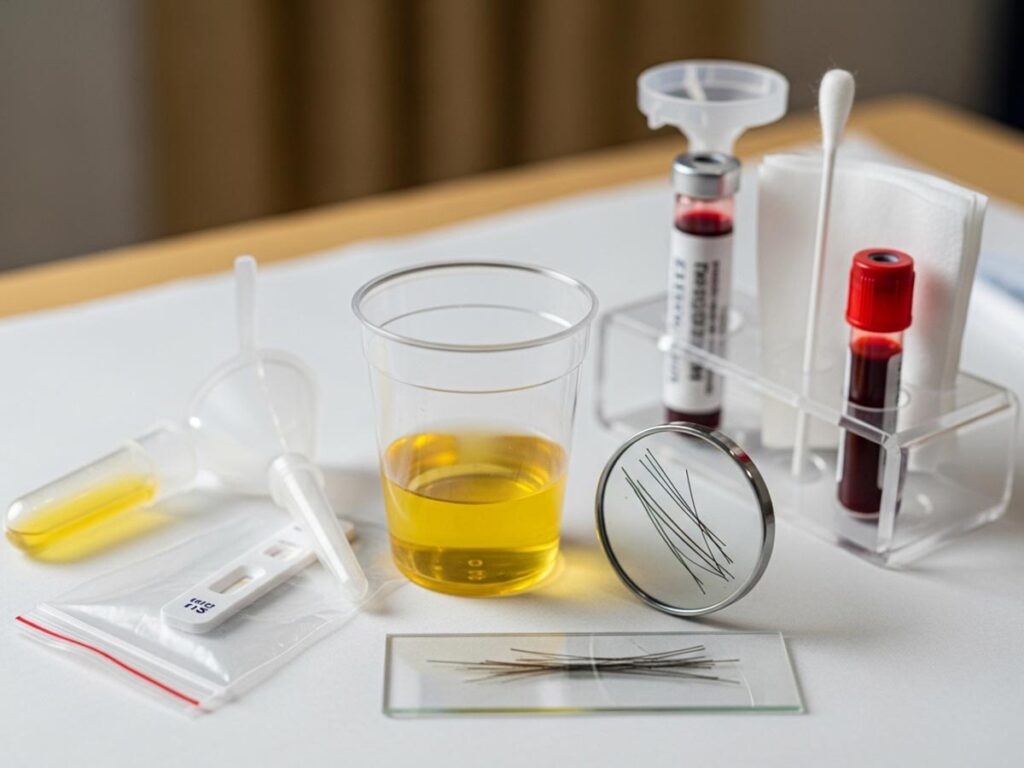
It’s a powerful visual reminder that labs have multiple testing methods, each requiring a tailored approach.
Know Your Opponent: The Common Test Types
For most pre-employment screenings, you’ll encounter a standard urine test. It’s the industry workhorse because it’s cost-effective and reliable. However, being prepared for the others is a smart move.
- Urine Tests: The most common form of drug screening. They are non-invasive and detect a wide range of drug metabolites—the byproducts left after your body processes a substance.
- Saliva (Oral) Tests: Increasingly popular for on-the-spot testing, like post-incident checks at work. They are simple to administer and focus on detecting very recent use.
- Hair Follicle Tests: The most daunting test due to its long memory. It’s often required for jobs that demand a verifiable, long-term, drug-free history.
- Blood Tests: The most invasive and expensive option. Blood tests are typically reserved for situations where determining current impairment is critical, such as after an accident.
What Factors Influence Detection Times
Passing a drug test is as much about your unique physiology as it is about the test itself. Several personal factors can dramatically alter how long a substance remains detectable in your system.
Your metabolism is a major player; a faster metabolism will clear drug metabolites more quickly. Body fat percentage is another critical factor, especially for fat-soluble compounds like THC. These metabolites are stored in fat cells, meaning an individual with higher body fat may have a significantly longer detection window than someone leaner. To dive deeper into the science, you can explore the differences between THC and THCA in our comprehensive guide.
The landscape of drug testing is constantly changing. While the percentage of American companies that screen employees has decreased from its peak, positivity rates have climbed, indicating that many people are still caught off guard.
Drug Detection Windows by Test Type
This table offers a general guideline for detection times. Remember, these are estimates—your personal metabolism, frequency of use, and body composition can shift these windows.
| Substance | Urine Test | Hair Test | Saliva Test | Blood Test |
|---|---|---|---|---|
| Marijuana (THC) | 3-30+ days | Up to 90 days | 1-3 days | 1-2 days |
| Cocaine | 2-4 days | Up to 90 days | 1-2 days | 1-2 days |
| Opioids | 2-4 days | Up to 90 days | 1-4 days | 1 day |
| Amphetamines | 1-3 days | Up to 90 days | 1-2 days | 12 hours |
| Benzodiazepines | 3-7 days | Up to 90 days | 2-3 days | 1-3 days |
This data highlights why identifying the test type is your crucial first step. Preparing for a saliva test is a world away from tackling a hair test.
How to Naturally Detox Your System

Before you rush to buy a detox kit, remember this: your body already has a sophisticated, built-in detoxification system. The most reliable path to a negative test result is to support and enhance this natural process. This isn’t a magical overnight fix; it’s a practical strategy that empowers your body to metabolize and eliminate unwanted compounds efficiently.
A successful natural detox is built on three pillars: hydration, nutrition, and exercise. By optimizing these areas, you create the ideal conditions for your liver and kidneys to operate at peak performance. It requires commitment, but the results are far more dependable than any last-minute gimmick.
Kickstart Your System with Smart Hydration
You know drinking water is important, but for a detox, how you hydrate matters just as much as how much. Water acts as the transport system that flushes metabolites out of your body via urine. The goal isn’t to chug a gallon of water an hour before the test—a classic mistake that can lead to a “dilute” sample flag.
Instead, adopt a consistent, elevated water intake for several days. A practical goal is 2-3 liters of water per day. This keeps your kidneys actively flushing your system without overworking them. For example, fill a large water bottle in the morning and set a goal to finish it and refill it by the afternoon.
A common pitfall is waiting until the last minute. Consistent hydration over several days helps your body process and eliminate metabolites steadily. This naturally lowers the concentration in your urine, making it much harder to detect.
You can also supercharge your hydration with additions that support your urinary system:
- Lemon Water: The citric acid in lemon can help enhance kidney function and increase urine output.
- Cranberry Juice: Pure, unsweetened cranberry juice is renowned for promoting urinary tract health, which aids the flushing process.
- Herbal Teas: Dandelion and green tea are natural diuretics, encouraging your body to expel more water and, with it, more waste products.
Fuel Your Detox with the Right Foods
Your liver is the primary organ responsible for breaking down substances, while your kidneys filter waste from your blood. Providing them with the right nutritional fuel can significantly accelerate detoxification. Focus on whole, unprocessed foods that are rich in the compounds your body needs to cleanse itself.
A detox-friendly diet is loaded with antioxidants, fiber, and vitamins. These nutrients work synergistically to neutralize harmful byproducts and ensure their efficient elimination.
A practical example of a detox-focused meal plan might be oatmeal with berries for breakfast, a large salad with grilled chicken for lunch, and baked salmon with roasted broccoli for dinner. This combination provides a steady supply of essential nutrients.
Key Foods to Incorporate:
- Leafy Greens: Spinach, kale, and other greens are packed with antioxidants and fiber.
- Cruciferous Vegetables: Broccoli, cauliflower, and Brussels sprouts contain compounds that support vital liver enzymes.
- Lean Protein: Chicken, fish, and legumes provide the amino acids your liver’s detox pathways need.
- High-Fiber Foods: Oats, apples, and beans bind to toxins in your digestive system and help remove them.
Sweat It Out with Strategic Exercise
Exercise, particularly cardio, is a powerful tool for accelerating a natural detox. When you increase your heart rate and break a sweat, you accomplish two crucial things. First, you boost your overall metabolism, helping your body process everything more quickly.
Second—and this is vital for fat-soluble compounds like THC—you burn the fat cells where these metabolites are stored. Sweating also provides a minor route of elimination for toxins, though urination remains the primary method.
However, timing is critical. You must stop exercising at least 48 hours before your test. A last-minute, intense workout can release a surge of stored metabolites into your bloodstream and urine. This paradoxically increases the concentration in your sample and can lead to a positive result. Use exercise as a long-term strategy, not a day-of fix.
For those in regulated professions, it’s essential to know the official rules. The U.S. Department of Transportation’s Office of Drug & Alcohol Policy & Compliance offers detailed guidelines for safety-sensitive positions.
Passing Urine, Hair, and Saliva Tests

There is no universal strategy for passing a drug test. The approach that works for a routine urine screen will fail spectacularly against a hair follicle test. To succeed, you must tailor your method to the specific test you are facing. Let’s break down the actionable insights and proven techniques for the three most common screening methods.
Acing the Urine Test
The urine test, or urinalysis, is the screening you are most likely to face. It’s crucial to understand that these tests don’t look for the drug itself but for its metabolites, which are left behind after your body processes it. The most effective strategy here is smart dilution.
The objective is to temporarily lower the concentration of metabolites in your urine below the laboratory’s detection threshold. On the day of the test, begin by drinking 20-30 ounces of water every hour for the 3-4 hours leading up to your appointment.
However, simply chugging water is a rookie mistake that produces a clear, colorless sample—an immediate red flag. A lab will mark it as “diluted,” likely forcing a re-test under stricter observation. You must make your diluted sample appear perfectly normal.
Here’s the actionable plan:
- Restore the Color: Two hours before your test, take a B-complex vitamin. The Riboflavin (B2) and Cobalamin (B12) will turn your urine a natural, believable shade of yellow.
- Boost Your Creatinine: Labs test for creatinine, a natural waste product. Dilution plummets these levels. Counteract this by taking a creatine supplement for a few days before the test, or by taking a larger dose on the morning of the test.
- Perfect Your Timing: Never provide your first urine of the day; it’s the most concentrated. Urinate at least once, and preferably twice, before your sample. When you fill the cup, catch the urine mid-stream, as the beginning and end of the flow can contain higher concentrations of metabolites.
Tackling the Hair Follicle Test
Let’s be direct: the hair follicle test is the most difficult to beat. It provides a historical record of substance use for up to 90 days. A natural detox is not a viable option unless you have been abstinent for over three months. Drug metabolites are deposited from the bloodstream into the hair shaft’s core as it grows, locking them in.
Since you cannot simply wash these metabolites out, your only realistic option is a specialized detox shampoo. These are not standard clarifying shampoos; they contain potent ingredients formulated to penetrate the hair’s outer cuticle and remove the metabolites from within.
Online forums often mention intense methods like the “Macujo” or “Jerry G.” These multi-step processes use harsh chemicals like salicylic acid and vinegar alongside detox shampoos. While some users report success, be aware that these methods can cause significant damage to your hair and scalp.
If you choose this route, invest in a reputable product and follow the instructions meticulously. Success often depends on performing multiple washes in the days leading up to the test.
Beating the Saliva Test
The saliva test, or oral fluid test, is frequently used for on-the-spot screening due to its short detection window—typically just the last 24 to 48 hours. This makes it the most straightforward test to pass with a bit of advance notice.
Your primary defense is a meticulously clean mouth. The goal is to physically remove or dilute the drug metabolites present in your oral fluids.
Here is a last-minute action plan:
- Brush Aggressively: Brush your teeth, gums, tongue, and the inside of your cheeks thoroughly and repeatedly.
- Use a Strong Mouthwash: An alcohol-based mouthwash is highly effective at stripping away contaminants. Swish for at least 30-60 seconds.
- Stay Hydrated: Drink water continuously to flush your mouth and dilute any remaining saliva.
- Eat a Fatty Meal: Anecdotal evidence suggests that eating high-fat foods can help absorb THC metabolites in your mouth, preventing them from being secreted into your saliva. For example, a burger and fries an hour before your test could help.
The moment you learn you have a saliva test, cease all substance use and begin this cleaning regimen. Even 30 minutes of preparation can make a decisive difference. It’s also vital to know your rights. The U.S. Equal Employment Opportunity Commission (EEOC) provides official guidance on pre-employment disability-related questions, which is relevant if you have a legitimate prescription.
Common Mistakes and How to Avoid Them
Passing a drug test is a high-stakes challenge, where even minor mistakes can lead to failure. Knowing what not to do is as critical as knowing what to do. Many well-intentioned people fail because they fall for misinformation or overlook a crucial detail.
To navigate this successfully, you must be strategic and skeptical. The internet is filled with quick-fix promises and myths that can be dangerous and ineffective. Let’s dissect the most common blunders to ensure you don’t fall into the same traps.
Falling for Unproven Internet Myths
The most perilous mistake is believing unsubstantiated claims online. You will find dangerous advice, such as drinking bleach, adding salt or other adulterants to your urine sample, or using ineffective home remedies like pectin. These methods are not only useless but can also pose serious health risks.
Modern labs are highly sophisticated. They test for more than just drug metabolites; they analyze temperature, pH, creatinine, and specific gravity to verify a sample’s integrity. If a method sounds too easy or miraculous, it is almost certainly a scam. Stick to proven strategies: natural detox, smart dilution, and reputable products. For a deeper dive, explore our article debunking common cannabis myths.
The Over-Dilution Trap
A frequent error is taking hydration to an extreme. While dilution is a valid strategy, chugging gallons of water right before a test is a tell-tale sign of tampering. This results in a sample that is nearly clear and shows suspiciously low creatinine and specific gravity levels.
Lab technicians are trained to identify this immediately. They will flag your sample as “dilute,” which is often viewed with the same suspicion as a positive result. This typically leads to a mandatory re-test, placing you under increased scrutiny.
Key Takeaway: The goal is strategic dilution—lowering metabolite concentration just enough to pass while maintaining the appearance of a normal sample. This requires a balanced approach: consistent hydration paired with B-vitamins for color and a creatine supplement to restore natural waste product levels.
Critical Lifestyle Errors to Avoid
Your daily habits in the days leading up to a test are crucial. A few poor choices can undermine your entire detox effort.
- Continuing Substance Use: This may seem obvious, but it must be stated. The moment you are aware of an upcoming test, you must cease all use immediately. Every clean day gives your body more time to eliminate metabolites. No product or method can mask recent use.
- Drinking Alcohol: Your liver is your body’s primary detoxification organ. Consuming alcohol forces your liver to prioritize processing it, effectively halting its ability to clear drug metabolites. Avoid alcohol completely during your detox period.
- Neglecting Sleep: Your body performs most of its repair and detoxification functions during sleep. Skimping on rest slows your metabolism and compromises your body’s natural cleansing processes. Aim for 7-9 hours of quality sleep per night.
Failing a drug test is more common than you might think. A comprehensive report analyzing millions of tests found that workplace drug test failures have reached record highs. This trend underscores the importance of avoiding these simple yet critical mistakes. You can learn more about these workplace drug testing trends in this detailed government report.
Should You Use a Professional Detox Product?
When time is short and the stakes are high, professional detox products can seem like the perfect solution. The market is saturated with drinks and pills all promising a clean test result. But before you invest, it’s essential to understand what these products actually do—and their limitations.
Most detox drinks are essentially a sophisticated, fast-acting version of the dilution method. They are a “flush and mask” system. You consume a large volume of liquid to dilute the drug metabolites in your urine, similar to using water.
The crucial difference lies in their formulation. These products are fortified with specific vitamins and minerals, like B vitamins and creatine. This is the “masking” component. The objective is to restore your urine’s color and chemical markers to normal levels, preventing the lab from flagging it as diluted.
Choosing a Reputable Brand
Navigating the crowded market of detox products can be overwhelming. The best approach is to look for brands with a long-standing reputation, consistent positive reviews, and transparent ingredient lists. Be wary of any product that promises a permanent “cleanse” in just one hour.
Use this checklist to vet a detox product:
- Clear Instructions: A reliable product will provide a precise, step-by-step guide, including when to drink it, how much water to consume, and the timing of your “clean” window.
- Key Ingredients: The label should list creatine monohydrate (to restore creatinine levels) and B-vitamins like Riboflavin (B2) and B12 (for natural color).
- Positive Customer Feedback: While no product is foolproof, a history of successful user experiences is a strong indicator of quality.
Let’s be clear: these products aren’t magic. Their effectiveness depends on meticulously following the instructions, your individual metabolism, and your level of substance use. They offer a fighting chance, not a guaranteed pass.
Understanding the Risks and Realities
Using a detox product involves a calculated risk. If not used correctly, your sample can still be flagged as “dilute.” While this may result in a re-test—buying you a few more days—you will be under much closer observation the second time.
The stakes are even higher for those in federally regulated, safety-sensitive industries like transportation and aviation, where testing standards are exceptionally rigorous. Data shows a significant increase in drug test failures in these sectors. You can read more about the challenges these safety-sensitive workers face on TTNews.com. For these jobs, relying solely on a commercial product is a substantial gamble.
Think of a professional detox drink as a last-resort option for a surprise urine test when natural detox is not possible. It is a tool for a specific situation and is completely ineffective for hair or blood tests. If you choose this path, do your research, set realistic expectations, and follow the directions precisely—your job may depend on it.
Got Questions About Passing a Drug Test? We’ve Got Answers.
When facing a drug test, you need clear, direct answers. Let’s address some of the most pressing questions people have when navigating this stressful situation.
Can I Actually Pass a Drug Test in Just 24 Hours?
Passing a test with only one day’s notice is extremely challenging, particularly for frequent users.
For a urine test, your only realistic option is a rapid dilution strategy. This involves drinking large amounts of water to flush your system while using B-vitamins and creatine supplements to mask the dilution. However, this is a high-risk approach that can easily result in a “dilute-negative” finding, which will likely trigger a mandatory re-test.
A saliva test is a different matter. With aggressive oral hygiene—multiple brushings and rinses with a strong, alcohol-based mouthwash—you have a decent chance of passing.
For hair and blood tests, passing within 24 hours is virtually impossible without resorting to specialized, often unproven products.
Will I Fail From Secondhand Marijuana Smoke?
This is highly unlikely, so there’s no need to worry about it. Official workplace drug screenings use a specific cutoff level for THC metabolites that is set high enough to distinguish between active use and incidental exposure.
To have even a remote chance of testing positive from secondhand smoke, you would need to be in an extreme situation, such as being confined to a small, unventilated room filled with dense smoke for a prolonged period. A brief exposure, like walking past someone smoking, will not cause you to fail a test.
Does Working Out Help Me Pass Faster?
Exercise can be an effective part of a long-term detox plan, but timing is everything. Regular cardio boosts your metabolism and helps burn fat cells where THC metabolites are stored, releasing them for elimination.
However, the critical rule is to stop all exercise at least 24-48 hours before your test. A last-minute workout can cause a surge of metabolites to be released from your fat stores into your bloodstream and urine. This can turn a potential pass into a definite fail.
How Accurate Are Those Home Drug Tests?
At-home drug tests are surprisingly reliable and can be an invaluable tool. Most home urine tests use the same initial screening technology (immunoassay) as professional labs. They provide an accurate snapshot of your current status.
If you can pass a home test with your first-morning urine (the most concentrated), your chances of passing the official test are very high. Just remember, they are not a 100% guarantee, as a lab may use a more sensitive cutoff or perform a more advanced confirmation test on a positive screen.
What if I Have a Prescription for a Medication That Shows Up?
You have rights in this situation. According to guidance from the U.S. Equal Employment Opportunity Commission (EEOC), employers must allow you to explain a positive result from a legally prescribed medication.
The best practice is to be prepared to disclose your prescriptions if a Medical Review Officer (MRO) contacts you after the test. As laws around medical cannabis evolve, staying informed about your local regulations is also crucial. If you want to understand different cannabinoids better, you can learn about the differences between CBD vs THC in our detailed guide.
Here at Wallflower Cannabis House, our mission is to provide the Las Vegas community with premium products and the education to enjoy them responsibly. Whether you’re a seasoned cannabis enthusiast or new to the experience, our knowledgeable budtenders are here to guide you. Discover our selection at https://wallflower-house.com/store/.