

Let’s cut through the noise. The classic difference is simple: Indica strains are your go-to for relaxing, sedating effects—that classic ‘body high’ perfect for unwinding at night. On the flip side, Sativa is known for its energizing, uplifting effects—a ‘head high’ that can spark creativity and sharpen your focus, making it a much better fit for daytime.
This simple distinction has been the North Star for cannabis users for decades. But is it the whole story? Let’s find out how to use this knowledge to get the exact experience you’re looking for.
Quickly Comparing Indica vs Sativa Effects
Diving into the world of cannabis can feel overwhelming, but understanding the classic indica vs. sativa effects is the perfect starting point. For years, these two categories have been the primary way people predict how a strain will make them feel. While we now know the science is more complex—it really comes down to a plant’s specific chemical profile—this traditional framework is still an incredibly useful guide.
Think of it like choosing a drink to match your mood. You wouldn’t grab a strong espresso right before bed, and you probably wouldn’t sip chamomile tea to gear up for a big project. The indica vs. sativa comparison works in a similar way, offering a practical shortcut to match a strain with the experience you’re after.
The Traditional Breakdown
The real distinction comes down to how each type is reported to make you feel. This isn’t just folklore; years of user experiences consistently report different outcomes. For instance, one major survey of cannabis users found that around 85% of people felt relaxed after using indica strains. Sativa users, however, were far more likely to report feeling alert, energized, and focused. You can see the data for yourself in the full study on user-reported effects.
This clear divide in reported feelings has solidified the reputation of each type:
- Indica: Famously nicknamed “in-da-couch,” it’s what you reach for when you want deep relaxation, stress relief, or help falling asleep. Think of it as your “off” switch after a long day.
- Sativa: Known for its mentally stimulating buzz, it’s a favorite for creative sessions, social events, and staying active. It’s your “on” switch for getting things done or having fun.
A simple trick to remember the difference is this: Indica puts you ‘in-da-couch’ for relaxation, while Sativa helps you feel ‘social’ and ‘stimulated’ with its energetic lift.
To lay it all out clearly, here’s a table that summarizes the classic effects people associate with each type.
Indica vs Sativa: A Snapshot of Common Effects
This table breaks down the traditionally reported effects, feelings, and ideal usage times for Indica and Sativa strains, helping you quickly grasp the core differences at a glance.
| Characteristic | Indica | Sativa |
|---|---|---|
| Primary Feeling | Relaxing & Sedating | Uplifting & Energizing |
| Type of High | Body High (physical) | Head High (cerebral) |
| Common Effects | Calm, Sleepy, Stress Relief | Creative, Focused, Euphoric |
| Ideal Time of Use | Evening / Nighttime | Daytime / Morning |
Keep this table in your back pocket as a starting point. It’s a handy guide for navigating your choices, but remember that individual experiences can vary based on the specific strain and your own body chemistry.
The Real Science Behind Cannabis Effects
While the indica vs. sativa model is a solid starting point, the real story of how a strain makes you feel is written in its chemistry. Think of it like a cocktail—it’s not just about whether you use gin or vodka, but about all the other ingredients and how they’re mixed. For cannabis, those ingredients are cannabinoids and terpenes.
Getting familiar with these compounds is the key to moving past guesswork. Instead of just asking, “Is it an indica or a sativa?”, you can start asking smarter questions about a strain’s specific chemical profile.
This small shift in focus puts you in the driver’s seat, making it much easier to find the exact experience you want, every single time.
Cannabinoids: The Core Drivers of Effects
Cannabinoids are the main active compounds in cannabis that interact with our body’s own endocannabinoid system, producing all the effects we feel. The two you’ll hear about most are THC and CBD, and their ratio is the first thing you should check on any product.
- THC (Tetrahydrocannabinol) is the famous one, the compound responsible for the euphoric “high.” It’s what people often turn to for pain relief, appetite stimulation, and that classic shift in perception. Strains with high THC will deliver more potent, mind-altering experiences.
- CBD (Cannabidiol) is non-psychoactive, meaning it won’t get you high. Instead, it often works to balance or soften the effects of THC. It’s best known for its calming, anti-inflammatory, and anti-anxiety properties. A strain with a good amount of CBD can feel much more clear-headed and less intense, even if its THC level is high.
The dance between THC and CBD is everything. The classic sleepy “indica” feeling, for example, often comes down to a specific THC-to-CBD ratio that encourages relaxation. Sativas, on the other hand, usually have a different cannabinoid mix that fuels their energizing reputation.
Terpenes: The Aromatic Architects of Experience
If cannabinoids are the engine, then terpenes are the steering wheel. These are the aromatic oils that give different strains their unique smells—from pine and citrus to sweet berries and earthy funk. But they do a lot more than just smell good.
Terpenes work together with cannabinoids in a process called the “entourage effect.” Basically, they can shape and guide the high, making it feel more relaxing, focused, or giggly.
Think of it this way: THC is the gas pedal, but terpenes decide whether you’re taking a chill, scenic drive or a high-energy joyride.
Here are a few common terpenes and how they influence the classic indica vs. sativa effects:
- Myrcene: Found in mangoes and lemongrass, this terpene has an earthy, musky scent. It’s often the dominant terpene in classic “indica” strains and is widely believed to be the source of that heavy, “couch-lock” feeling.
- Limonene: Just like it sounds, this one has a bright, citrusy aroma. It’s frequently found in “sativa” strains and is associated with lifting your mood, cutting through stress, and giving you a burst of energy.
- Caryophyllene: With a spicy, peppery kick you’d recognize from black pepper, this is the only known terpene that also acts like a cannabinoid. According to the U.S. National Institutes of Health, it may help with inflammation and pain without contributing to the psychoactive high.
Understanding a strain’s terpenes is a total game-changer. For instance, people often ask if sativas can actually help with anxiety. The answer is usually found in the terpene profile. Our guide on how specific sativa strains can relieve anxiety dives right into this, showing how the right terpenes can make all the difference.
Why The Indica vs. Sativa Model Is Outdated
If you’ve been around cannabis for a while, you’ve probably had the conversation. The old-school indica vs. sativa model just isn’t holding up anymore. For decades, we used these two labels as a simple shorthand to guess how a strain might feel, but science is now showing us there’s a much more complex—and interesting—story happening behind the scenes.
Relying on “indica” or “sativa” today is a bit like judging a book by its cover. You get a hint of what’s inside, but the real story is written in the plant’s unique chemical profile.
This isn’t just a minor correction. Recent genetic research has thrown a major wrench in the old system, confirming that there’s often no reliable genetic difference between plants we call indica and those we call sativa. Thanks to decades of enthusiastic cross-breeding, the genetic lines have become so blurred that many strains are virtually indistinguishable.
Moving Beyond Genetics
The long-held belief was simple: indica and sativa were two separate cannabis species, and their genetics dictated their effects. But when scientists actually mapped out the cannabis genome, they found something completely different.
A landmark study, for instance, found no consistent genetic patterns that could separate the two groups. In fact, some plants labeled “indica” were just as genetically different from each other as they were from plants labeled “sativa.” This is a huge deal. It strongly suggests the classic sleepy vs. energetic effects we associate with these labels don’t come from some deep-seated genetic code, but from the specific chemicals the plant produces. You can dive into the full research on cannabis genetics to see the data for yourself.
What this means for you is that a plant’s appearance—whether it’s short and bushy or tall and lanky—tells you almost nothing about how it will actually make you feel. The real magic lies in its specific cocktail of cannabinoids and terpenes.
The chart from the study below paints a clear picture. The genetic markers for indica and sativa are all over the map, with no neat clusters.

As you can see, the green (sativa) and blue (indica) dots are completely mixed. This is visual proof that these labels don’t represent distinct genetic groups anymore.
A Better Way: Chemovars
So, if indica and sativa are unreliable guides, what should you look at? The industry is slowly shifting toward a much more precise system based on chemovars, a technical term for “chemical varieties.”
This approach ditches the old botanical labels and gets straight to the point: a strain’s chemical fingerprint. Instead of asking your budtender if a strain is an indica or sativa, you’ll get much better results by asking about its cannabinoid and terpene content.
Think of it like coffee. You don’t just walk into a café and ask for “coffee.” You get specific. You might want a dark roast, a light single-origin, or a balanced Colombian blend. Each has a unique flavor and effect, and it’s time we started treating cannabis with the same level of detail.
Understanding a strain’s chemovar puts the power back in your hands. Here’s a quick guide to what you should be looking for:
- Cannabinoid Profile: What are the THC and CBD percentages? A strain with high THC and almost no CBD will feel completely different from one with a balanced 1:1 ratio.
- Dominant Terpenes: Which terpenes are leading the charge? A strain packed with myrcene is far more likely to feel relaxing, while one rich in limonene or terpinolene will probably be more uplifting—no matter what its old indica or sativa label says.
By focusing on these chemical markers, you can stop guessing and start making truly informed choices. It’s a shift that helps you move past marketing hype and find the exact experience you’re looking for.
Choosing Strains for Real-World Situations
Theory is one thing, but finding a strain that fits perfectly into your life is the real goal. Let’s move past the guesswork and start making confident choices based on what you actually want to do or feel, whether that’s kicking back, sparking creativity, or getting some relief.
The most practical way to navigate the options is to match the experience you’re after with a specific strain profile. Forget the indica vs. sativa labels for a minute and focus on the situation at hand. What are you trying to achieve?
This classic breakdown gives you a good starting point, guiding you based on the general effect you’re looking for and the time of day.
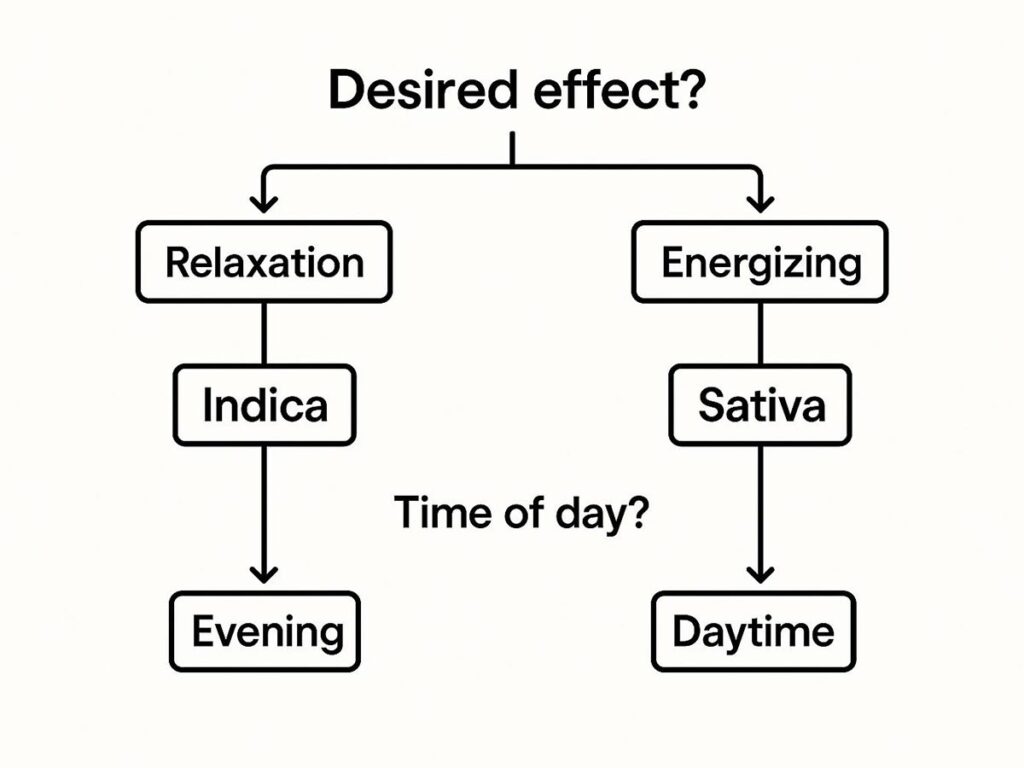
While this is a helpful visual, the most important takeaway is this: your personal goal is the number one factor in picking the right product.
Matching Strain Profiles to Your Goals
Let’s walk through a few common scenarios and connect them to the chemical profiles people report as being most effective. Thinking this way—focusing on effects instead of just brand names—is how the pros find exactly what they need.
For a chill movie night at home, you want a totally different vibe than for a lively game night with friends. For that quiet evening in, you’ll want a strain rich in myrcene, a terpene famous for its relaxing, almost sedating properties. Found in many classic “indica” profiles, it’s perfect for quieting a racing mind and sinking into the couch.
On the other hand, for that social get-together, you need something that sparks energy and conversation. A strain high in limonene or terpinolene is a much better fit. These terpenes are known for their uplifting, mood-boosting effects and are usually found in strains labeled “sativa.” They can help you feel more engaged, happy, and ready to mingle.
Actionable Insight: Match the terpenes to the task. Myrcene for ‘me time,’ and limonene for ‘we time.’ This simple mental shift makes finding the right strain feel much more intuitive.
A great way to get familiar with these profiles is to explore the top weed strains and see what effects people report. It’s a practical starting point for figuring out what might work for you in different situations.
Scenarios for Recreational Use
Choosing the right strain for fun activities can completely elevate the experience. It’s all about lining up the plant’s profile with what you’re doing to get the most out of your time.
- Creative Projects: Need to paint, write, or just brainstorm? Look for sativa-dominant hybrids with moderate THC and terpenes like pinene, which is known to help with focus.
- Outdoor Adventures: For a hike or a day of exploring, an energizing strain is your best friend. A classic sativa profile can deliver that boost of physical energy and mental clarity that makes the whole experience feel more vibrant.
- Social Gatherings: To feel chatty, giggly, and connected, a sativa-dominant strain high in limonene is usually a fantastic choice. It can help ease social jitters and put everyone in a positive, upbeat mood.
Scenarios for Wellness and Therapeutic Goals
When it comes to therapeutic use, the focus shifts from the activity to the outcome. The goal is to address a specific need, like managing pain, getting better sleep, or easing anxiety. This is where understanding how cannabinoids and terpenes work together becomes even more critical.
According to the National Center for Complementary and Integrative Health, cannabis is being studied for a host of conditions. For example, people seeking relief from chronic pain often gravitate toward strains with a balanced 1:1 ratio of THC to CBD. This combo can deliver the potent pain-relieving properties of THC, while the CBD helps to buffer the intensity of the high.
Thinking about your specific goals is the best way to narrow down your options. Below is a quick guide to matching common situations with the right kind of strain profile.
Matching Your Goal to a Strain Type
| Your Goal or Situation | Recommended Strain Profile | Why It Works (Key Effects) |
|---|---|---|
| Winding Down Before Bed | Indica-dominant with high myrcene | Promotes deep physical relaxation and a sense of calm, making it easier to fall asleep. |
| Managing Daily Stress | Hybrid with balanced THC/CBD and linalool | Linalool is known for its calming, anti-anxiety effects, while balanced cannabinoids offer gentle relief without being overwhelming. |
| Easing Chronic Pain | High-CBD or a 1:1 THC/CBD ratio | CBD is known for its anti-inflammatory properties, while THC provides potent pain relief. The combination offers a powerful synergy. |
| Boosting Daytime Mood | Sativa-dominant with high limonene | Limonene is strongly associated with mood elevation and stress relief, providing a cheerful and energizing mental lift. |
By zeroing in on your specific situation and the outcome you want, you can make smarter, more effective choices. This practical mindset empowers you to find the perfect strain that truly enhances your life, whether it’s for recreation, wellness, or a little of both.
A Smart Consumer’s Guide to Buying Cannabis
Walking into a dispensary can feel like landing in a foreign country. You’re surrounded by talk of indica vs. sativa, and it’s easy to feel lost. But here’s the secret: becoming a confident cannabis buyer is simpler than it looks.
The key isn’t memorizing a hundred strain names. It’s learning to read the product’s lab report—the real story behind the marketing. Stop worrying about “indica” or “sativa” and start focusing on the chemical profile that actually dictates your experience. Master a few key details, and you’ll walk into any shop, ask the right questions, and walk out with the perfect product.
Look Beyond the Label to the Lab Report
Every legal cannabis product comes with a lab report, often called a Certificate of Analysis (COA). Think of this as your personal roadmap. It will tell you far more about a strain’s likely effects than any indica or sativa label ever could. It might look intimidating at first, but you only need to focus on two key sections.
First, find the cannabinoid percentages. This tells you about the potency and balance:
- Total THC: This number clues you into the strength of the high. Anything pushing 25% or more is generally considered potent and will likely deliver a more intense experience.
- Total CBD: This shows the amount of the non-psychoactive compound known for its calming, balancing properties. A product with a solid amount of CBD, say 5% or more, often means a more clear-headed, less anxious high.
Next, and this is the real game-changer, find the terpene profile. This lists the aromatic compounds that truly steer the experience. You don’t need to know all of them; just look for the top two or three, as they’ll have the biggest influence.
Practical Example: A strain might be labeled a “sativa,” but if its COA shows it’s dominant in myrcene (a relaxing terpene), it’s probably going to feel more sedative than you’d expect. On the flip side, an “indica” high in limonene (an uplifting terpene) could give you a surprising jolt of energy. The COA cuts right through that confusion.
How to Talk to Your Budtender
Your budtender is your guide, but you get the best advice by asking the right questions. Instead of walking in and asking, “What’s a good indica?”, frame your question around the feeling you’re after. That helps them match a product’s chemistry to your desired outcome.
Here are a few practical ways to rephrase your questions:
- “I’m looking for something to help me unwind after work, but I don’t want to be glued to the couch. What do you have with a good amount of linalool or myrcene?”
- “I need a strain for a weekend hike that will keep me feeling energized and focused. Do you have anything high in terpinolene or pinene?”
- “I sometimes get anxious with high-THC strains. Can you point me to a product with a more balanced THC-to-CBD ratio?”
When you ask questions like this, you show you’ve done your homework, and it helps your budtender zero in on the perfect product for you. The conversation shifts from vague labels to real, tangible effects. If you want to dive deeper, the U.S. National Library of Medicine has some fascinating research on terpenes and what they do.
Start Low and Document Your Experience
At the end of the day, we’re all wired differently. The same strain can hit two people in completely different ways. The only way to become an expert on what works for you is to start with a low dose and keep track of what happens.
- Start Small: I can’t stress this enough. Take a single puff or a tiny piece of an edible (think 2.5 to 5 mg). You can always have more, but you can never have less.
- Wait and Observe: Give it time. With smoking or vaping, hang back for at least 15-20 minutes before deciding if you want more. With edibles, you absolutely need to wait up to two hours.
- Take Notes: A simple journal is your best tool. Jot down the strain name, its main terpenes, how much you had, and how it made you feel. Creative? Relaxed? Sleepy? Anxious?
This simple habit of testing and tracking is the fastest way to understand how your body reacts to different cannabis profiles. Before you know it, you’ll have a personal cheat sheet that empowers you to make smart, confident choices every single time.
Common Questions About Indica and Sativa Effects

As you explore the differences between indica and sativa, a few common questions always come up. The cannabis world is full of nuance, and it’s smart to get clear on the finer points.
Let’s dive into some of the most frequent questions we hear. Getting these answers straight will help you navigate your options with more confidence and avoid the usual pitfalls.
Can an Indica Feel Energizing or a Sativa Feel Relaxing?
Absolutely. This is the best example of why the old indica/sativa labels are falling short. The effects you feel come from the plant’s entire chemical profile—its unique mix of cannabinoids and terpenes—not just its assigned category.
For instance, you might find an “indica” strain loaded with terpinolene, a terpene known for its uplifting, creative buzz. That indica is almost certain to feel more energizing than its label suggests.
On the flip side, a “sativa” with a high level of myrcene—a terpene famous for inducing “couch-lock”—could easily leave you feeling deeply relaxed. On top of that, your own body chemistry and tolerance levels will always play a huge part in the final outcome.
This is exactly why it’s so much more useful to look at a strain’s lab data, like its dominant terpenes and cannabinoid ratios. That information will give you a far more accurate prediction of the experience than a simple label ever could.
What Are Hybrid Strains and How Do They Feel?
Hybrids are cannabis plants bred from both indica and sativa parents. These days, they make up the vast majority of what you’ll find on dispensary shelves. Breeders create hybrids to cherry-pick specific traits and fine-tune the final effects.
Because of this genetic mixing, there’s no single “hybrid” feeling. Instead, hybrids exist on a massive spectrum:
- Sativa-Dominant Hybrids: These usually deliver a clear-headed, uplifting effect but with a nice touch of body relaxation to smooth out the edges. They’re fantastic for daytime use when you want to stay mentally sharp without any anxiety.
- Indica-Dominant Hybrids: Expect noticeable stress relief and body relaxation from these, but typically with less of the heavy sedation of a pure indica. They’re perfect for winding down in the evening without immediately falling asleep.
- Balanced Hybrids: Often called 50/50 hybrids, these try to give you the best of both worlds. You might find yourself in a happy, creative headspace while your body enjoys a gentle, calming sensation, making them incredibly versatile.
Does My Consumption Method Change the Effects?
Yes, how you consume your cannabis makes a huge difference in the onset, duration, and even the type of effects you feel. The delivery method directly impacts how your body processes the active compounds.
Smoking or vaping sends cannabinoids straight to your bloodstream through your lungs, so you feel the effects almost instantly—usually within minutes. This gives you much more control over your dose, since you can take a small hit and see how it feels.
Edibles are a completely different ballgame. Your digestive system processes them, and your liver converts THC into a much more powerful compound called 11-hydroxy-THC.
This metabolic journey means:
- A much longer wait for effects (30 minutes to 2 hours).
- A high that is often stronger and lasts much longer (4 to 8 hours).
- An experience that tends to be more body-focused, which can sometimes overpower the subtle differences between strains.
Can You Tell Indica and Sativa Plants Apart Visually?
With original “landrace” strains from decades ago, you absolutely could. The classic indica plant, adapted for cooler climates, is short and bushy with wide, dark green leaves. Sativas, native to hot, humid regions, grow tall and thin with narrow, light green leaves. You can find more details on this and other topics in our frequently asked questions section.
But after decades of cross-breeding, almost every plant today is a hybrid. While some strains might look more like an indica or a sativa, you can no longer reliably guess the effects just by looking at the leaves.
A plant’s physical appearance is now more of a concern for growers than for consumers. For you, the only truly reliable guide to the experience ahead is its chemical profile.